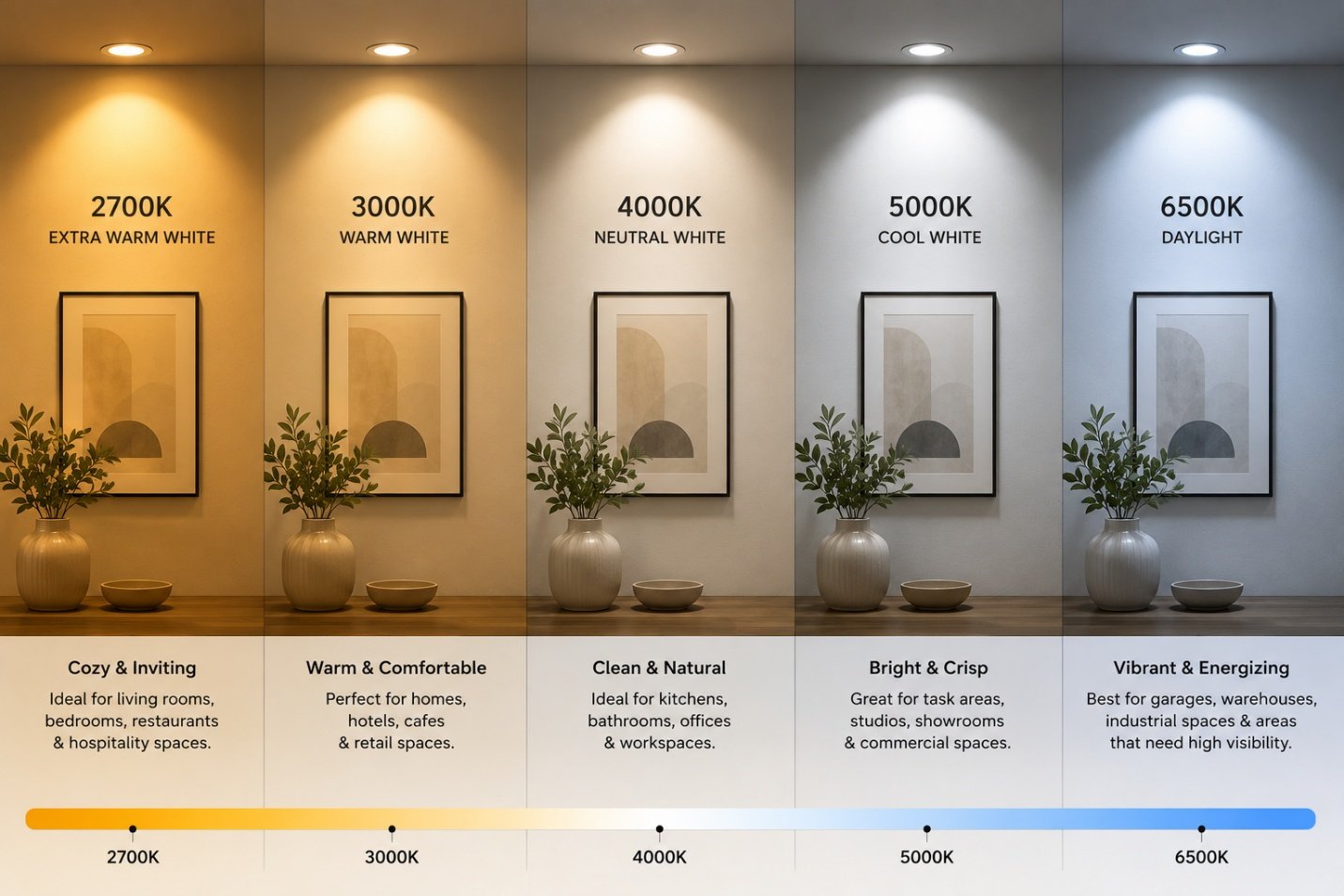
Kelvin (K) is the unit used to measure the color temperature of light. It describes whether a light appears warm, neutral, or cool, helping determine the overall look and feel of a space. Unlike brightness, which is measured in lumens, Kelvin only refers to the appearance of the light itself. Selecting the right color temperature helps create an environment that is both comfortable and suited to its intended purpose.
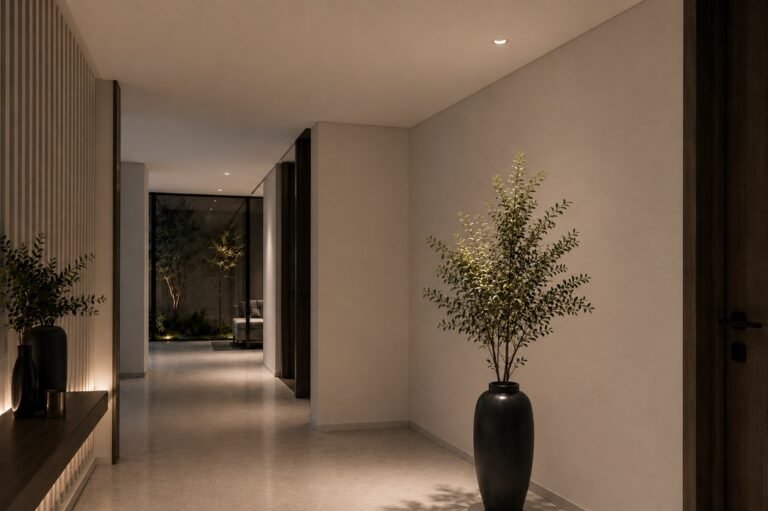
Different Kelvin values create different lighting effects. 2700K produces a warm, soft glow that is ideal for creating cozy and relaxing spaces such as living rooms, bedrooms, hotels, and restaurants. 3000K offers a warm white light that provides a balance between comfort and visibility, making it a popular choice for residential interiors and hospitality projects. 4000K delivers a neutral white light that is well suited for offices, kitchens, retail stores, and commercial spaces where clarity and comfort are equally important. 5000K to 6500K produces a cool white or daylight effect that enhances visibility and is commonly used in healthcare facilities, industrial environments, and outdoor applications.

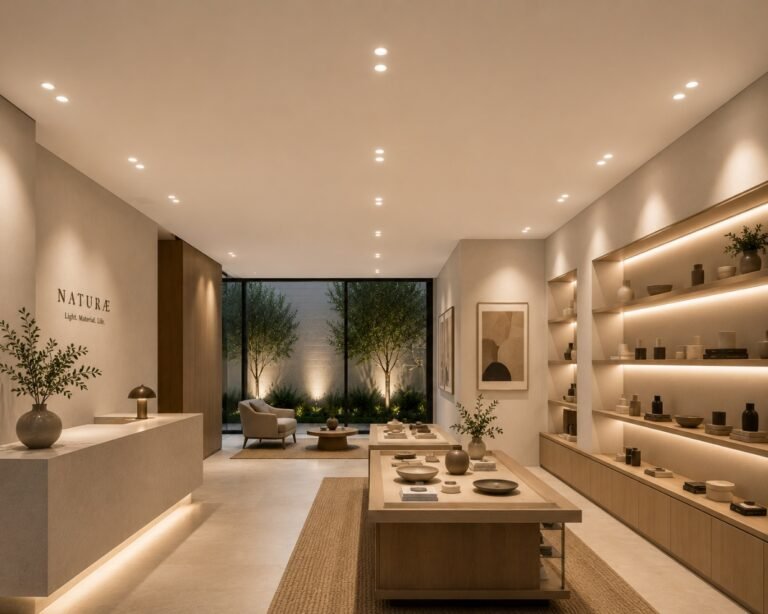
In shopping malls, lighting plays a key role in shaping the customer experience. Recessed lights provide clean, even illumination, while the right Kelvin helps create an inviting atmosphere, improves visual comfort, and enhances the appearance of retail displays and merchandise.Their broad, uniform light distribution ensures consistent illumination across walkways and retail displays, creating a welcoming atmosphere while helping merchandise appear clear, vibrant, and true to colour.

For highlighting architectural features, artwork, or retail displays, Track lights offer focused illumination with excellent flexibility. Selecting the appropriate color temperature ensures that focal points appear natural and visually appealing while complementing the overall lighting design.
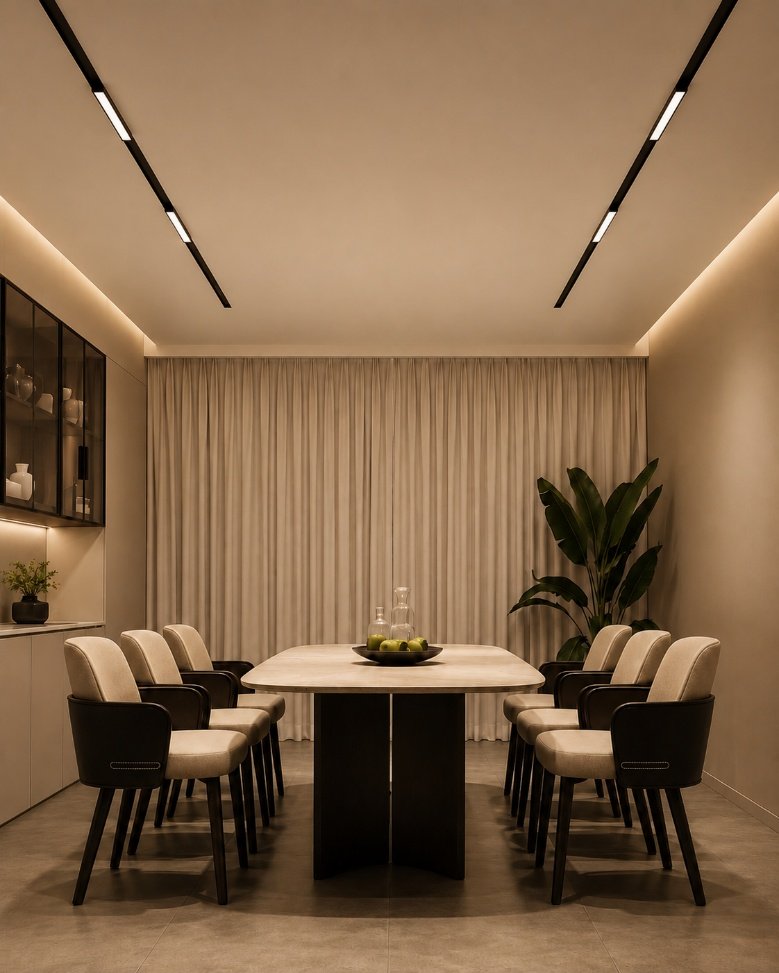
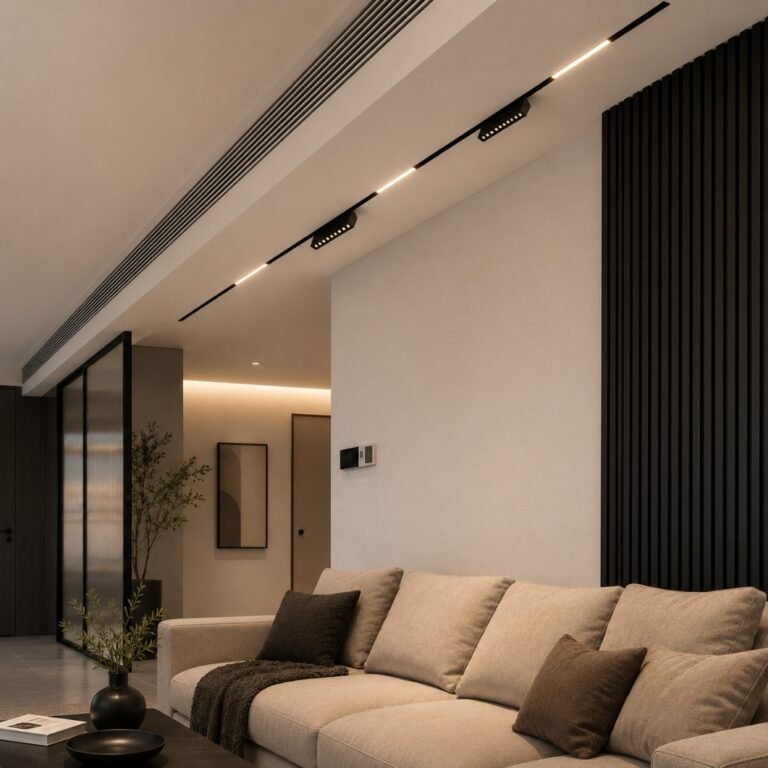
Modern interiors often incorporate Magnetic lights because of their versatility and sleek appearance. Available in different color temperatures, they can be used to create layered lighting that combines ambient, accent, and task lighting, allowing spaces to feel both comfortable and visually balanced.
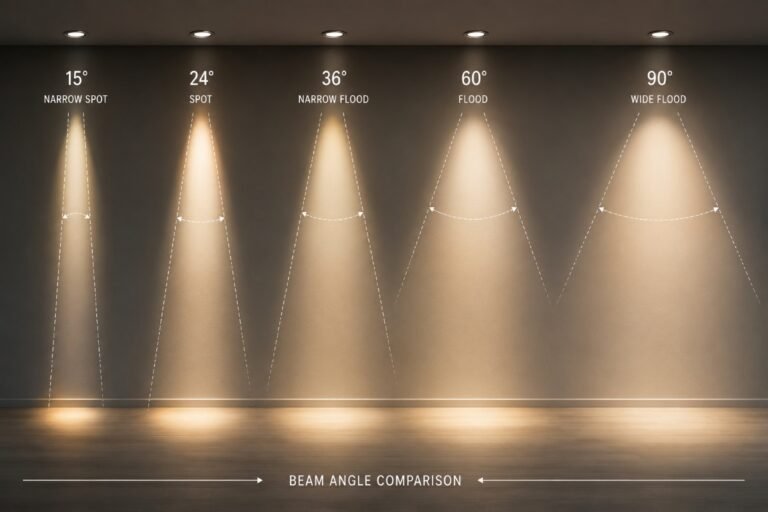
When planning any lighting design, Kelvin should be considered alongside brightness, beam angle, and the purpose of the space. Choosing the right color temperature helps improve visual comfort, enhances interior finishes, and creates an atmosphere that supports the way a space is used.